How Much Are My Sneakers Worth? How to Check Resale Value
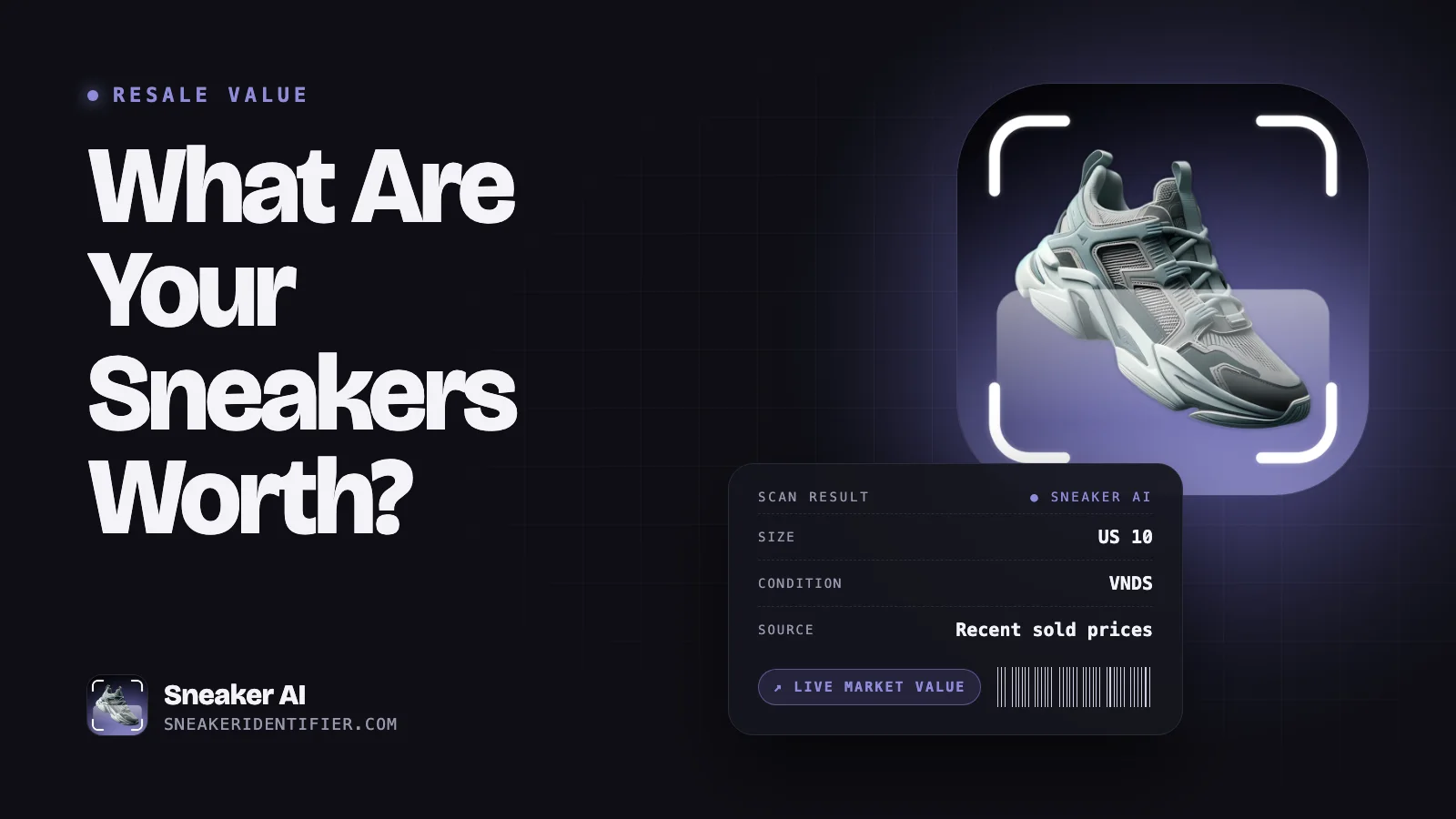
Whether you're clearing out your closet, insuring a collection, or deciding whether to flip a pair, the question is the same: how much are my sneakers worth? The answer is rarely the number you see on a listing. Real resale value depends on the exact colorway, your size, the condition, what's in the box, and what buyers have actually paid recently.
This guide walks through a reliable, repeatable way to price any pair of sneakers, plus the factors that push value up or down and how to get the most money when you sell.
Quick answer: To find out how much your sneakers are worth, identify the exact model and style code, then look up recent sold prices (not asking prices) for your size on resale platforms like StockX, GOAT, and eBay's sold listings. Adjust for condition, box, and accessories, then subtract selling fees to see what you'd actually take home.
Step 1: Identify the Exact Shoe
Value is tied to a specific product, not a general model. A "Jordan 1" can be worth anything from well below retail to many times retail depending on the colorway and release.
Find the style code, printed on the size tag inside the shoe (usually on the back of the tongue) and on the box label. For Nike and Jordan, it looks like DD1391-100. Search that code and you'll find the exact colorway and release.
If you don't have the box and the tag is worn, a sneaker identifier app can recognize the model and colorway from a photo. Our guide on how to identify sneakers from a picture covers every method, and our breakdown of the Nike shoe tag explains how to read the code.
Step 2: Note Your Size
Size has a bigger impact on sneaker value than most people expect. The same shoe can sell for very different prices in different sizes:
- Common sizes have the most buyers but also the most supply
- Very small and very large sizes are produced in smaller quantities, which can push prices up or, for less popular models, leave them hard to sell
- Grade school (GS) and women's sizes often have their own separate price curves
Always look up prices for your exact size, not the "lowest price" headline on a product page.
Step 3: Grade the Condition Honestly
Condition is the biggest variable you control. Resale markets broadly use these grades:
| Grade | What it means |
|---|---|
| Deadstock (DS) | Brand new, never worn, never tried on outside, with the original box |
| Very near deadstock (VNDS) | Worn once or twice, with no visible wear |
| Lightly worn | Minor creasing and light sole wear, with a clean upper |
| Worn | Visible creasing, sole wear, and possible scuffs or discoloration |
| Beaters | Heavily worn, with significant wear, damage, or restoration needed |
Be honest. Overgrading leads to returns, disputes, and negative feedback, and buyers check photos closely.
What lowers value most: heavy toe box creasing, yellowed or oxidized soles, worn-down heels, stains, odor, and separating or crumbling midsoles on older pairs.
Step 4: Check Sold Prices, Not Asking Prices
This is the step most people skip, and it's the most important one. A listing price is just what a seller hopes to get. Sold prices show what buyers actually paid.
Where to look:
- StockX: Shows recent sales and price history for each size (deadstock pairs)
- GOAT: Shows prices for new and used pairs, broken out by size and condition
- eBay: Search the model and style code, then filter for sold items to see completed sales, including used pairs
- Consignment stores: Useful as a reference for rare and vintage pairs
Look at the last several sales in your size, not just the most recent one. A single unusual sale can be misleading. You're looking for a realistic range.
Step 5: Adjust for Box, Accessories, and Proof
Extras can meaningfully change what buyers pay:
- Original box (in good shape): Expected for deadstock pairs. Missing or damaged boxes lower value.
- Extra laces, tags, hang tags, and inserts: Collectors pay more for "OG all" pairs, meaning everything that came in the box.
- Original receipt or proof of purchase: Builds trust, especially for expensive pairs.
- Certificate of authenticity: A documented legit check reassures buyers and can help you sell faster, particularly on peer-to-peer marketplaces where buyers can't rely on platform authentication.
Step 6: Subtract Fees and Shipping
What a shoe sells for and what you take home are two different numbers. Resale platforms typically charge a mix of transaction fees, payment processing fees, and sometimes cash-out or shipping fees. These vary by platform, seller level, and region, and they change over time.
Before you list, check each platform's current fee page and calculate your net payout. A slightly lower sale price on a platform with lower fees can leave you with more money.
What Makes Sneakers Gain or Lose Value?
Understanding why prices move helps you decide when to sell or hold.
Factors that push value up:
- Limited production: Quickstrikes, collaborations, regional exclusives, and Friends & Family pairs
- Cultural moments: A celebrity sighting, an anniversary, or a moment in a film or game
- Original releases: Pairs from the first release of a famous colorway often carry a premium over later retros
- Desirable sizes for that model
Factors that push value down:
- Restocks and retros: When a colorway is re-released, prices for existing pairs often soften
- Wear and damage, especially creasing, yellowing, and sole wear
- Age-related breakdown: Older sneakers with polyurethane midsoles can crumble (a process called hydrolysis), which hurts wearability and value
- Hype cooling off: Trend-driven models can drop as attention moves elsewhere
- Authenticity doubts: Missing box, missing tag, or no proof of purchase
How to Get the Most Money for Your Sneakers
- Clean them first. A thorough cleaning can lift a pair a full condition grade. Our guide on how to clean white sneakers covers the process.
- Take great photos. Use natural light and shoot every angle: both sides, toe, heel, soles, insoles, the size tag, and the box label. Show flaws honestly.
- Choose the right platform. Deadstock pairs often do best on authenticated resale platforms. Used pairs often do better on marketplaces that handle used listings well.
- Prove authenticity. A legit check certificate removes a big buyer worry and can help you sell faster.
- Time it well. Avoid listing right after a restock of the same colorway, and consider seasonal demand (some colorways sell better at certain times of year).
- Price from sold data. Price slightly below recent comparable sales if you want a quick sale, or at the top of the range if you're willing to wait.
Protecting Your Sneakers' Value Long Term
If you're holding pairs as part of a collection, storage matters as much as condition on day one. UV light, heat, and humidity cause yellowing, glue failure, and midsole breakdown over time. Our guide on how to store sneakers covers how to slow all three.
New to collecting? Our beginner's guide to sneaker collecting covers how to build a collection that holds value.
Frequently Asked Questions About Sneaker Value
How do I find out how much my sneakers are worth for free?
Identify the exact style code, then look up recent sold prices for your size on StockX, GOAT, and eBay's sold listings. Sneaker identifier apps can also show live market prices from a photo.
Are used sneakers worth anything?
Many are, especially popular Jordans, Dunks, and collaborations in good condition. Used pairs sell for less than deadstock, and the gap depends on condition, so check sold listings for used pairs of your model to see the real range.
Do sneakers lose value if you wear them?
Usually, yes. Even one wear moves a pair from deadstock to "worn," which most buyers price lower. If you're keeping a pair as an investment, don't wear it. If you're buying to wear, don't worry about it.
Why are my sneakers worth less than retail?
Not every release resells above retail. General releases with large production runs, frequent restocks, or cooling hype often trade at or below retail, especially once worn.
Does the box affect sneaker value?
Yes. Deadstock pairs are expected to come with the original box in good condition. A missing or damaged box usually lowers the price and can make buyers more cautious about authenticity.
How often do sneaker prices change?
Constantly. Resale prices respond to restocks, trends, and seasonal demand, so check recent sales right before you list rather than relying on a price you saw months ago.
Pricing sneakers accurately comes down to a simple discipline: know the exact shoe, check what your size actually sold for, grade condition honestly, and account for fees. Do that, and you'll never undersell a grail or overprice a pair that sits for months.
Get the Value of Your Sneakers Instantly
Scan any pair to identify it and see live resale prices for your size — then add a Certificate of Authenticity to sell faster and with more trust.